Personal Branding Guide for Founders | Avion C. Thomas
Personal Branding Guide for Founders | Avion C. Thomas
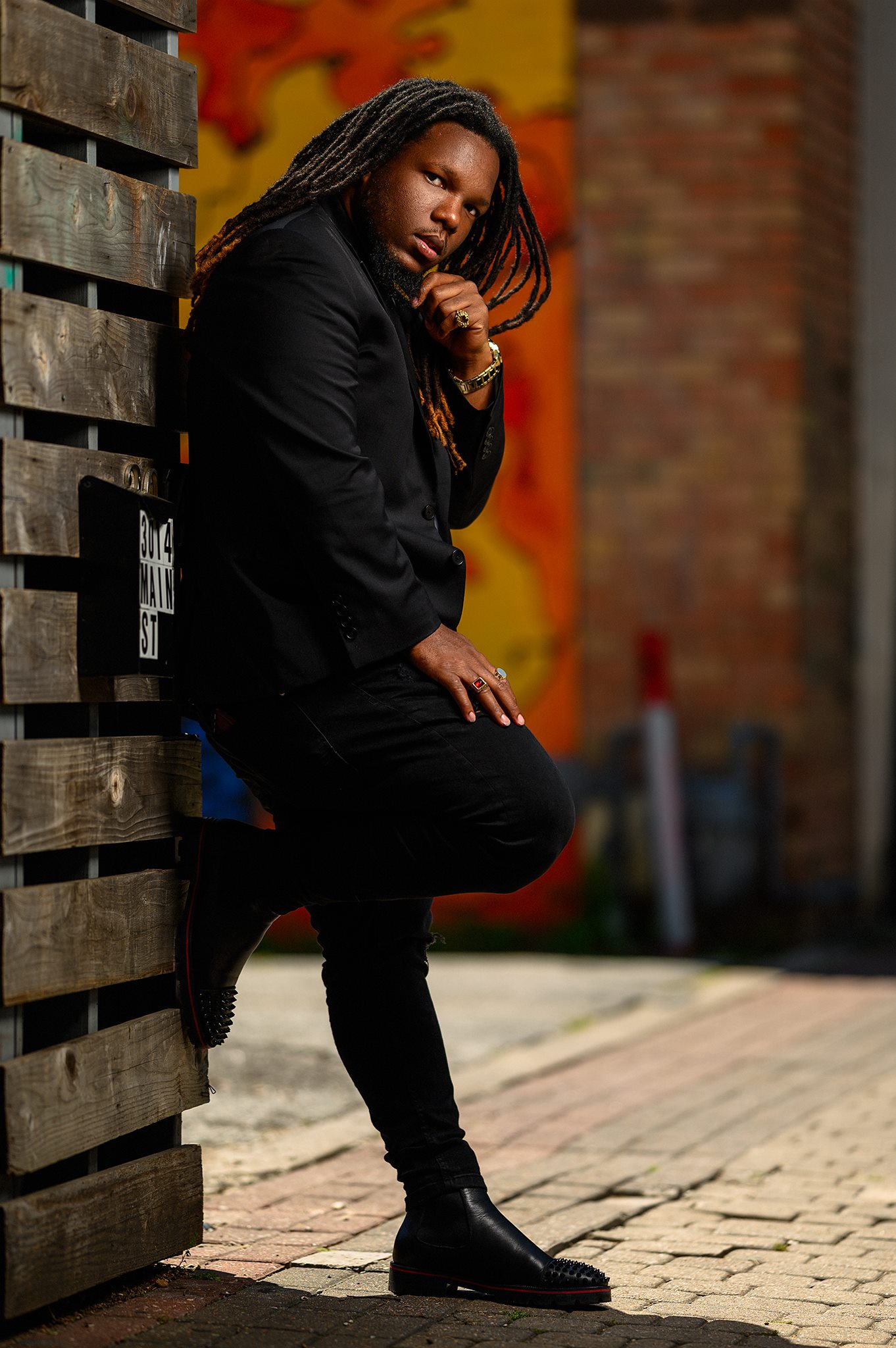
Attract More Opportunies: The Personal Branding Guide for Entrepreneurs, Founders, and Small Business Owners
If you are great at what you do but still feel overlooked, underbooked, or hard to understand online, the problem may not be your talent. It almost never is.
It may be your brand.
Not your logo.
Not your colors.
Not your website font.
Your brand.
The way people perceive you.
The way they talk about you when you are not in the room.
The way they decide whether you are worth trusting, hiring, referring, or ignoring.
That is why personal branding matters.
We live in a world filled with other worlds, people are not just buying services anymore. They are buying solutions that give them clarity in their world view. They are buying confidence. They are buying belief in themselves and the person behind the offer.
That means if you want to attract more clients, building a personal brand is no longer optional. It is one of the most practical business assets you can build.
This guide is designed to help you do that in a way that works for who you are.
Not as a fake influencer.
Not with “post more and hope”.
Not in the “just be consistent” advice everybody repeats.
By the end of this guide, you will have a clearer understanding of what personal branding really is beyond the buzzword, why it matters so much for you, and how to use it to attract more aligned clients, opportunities, and visibility.
What personal branding actually is
Personal branding is the intentional process of shaping your reputation in a way that makes your value easier to see, trust, and remember.
It is how you establish and promote what you stand for by sharing your skills, story, experience, values, and mission with the people you want to reach.
A personal brand is not just what you say about yourself.
It is the complete experience people have with you.
Its ownership of the space that you occupy in peoples mind. Its your personal presence!
Your content. Your message. Your visuals.
Your tone. Your story. Your experiences.
Your consistency. Your standards.
Your unique way of thinking.
All of it is branding.
That's why branding is not just about pretty aesthetics.
Branding is about shaping perception because perception becomes reality.
Why personal branding matters more than ever
Trust in faceless brands and big businesses are declining.
People want to know the real they want to connect with who they are buying from.
They want to know the face, the thinking, the values, and the proof behind the business.
People buy from people!
People buy from people they like.
People buy from people they trust.
People buy from people they know.
A visible and credible personal brand increases reach, response rates, conversion, and pricing power. It makes it easier for aligned clients to find you, believe in you, and make decisions faster. A strong brand also shortens the sales cycle.
Why?
Because there's power in the compounding effect. When someone has already seen your ideas, your process, your results, and your point of view over time, you no longer enter the conversation as a stranger. You enter as someone they already feel connected to.
That becomes leverage.
As founder-lead businesses: service providers, founders, and creatives rise to the top with a strong local footprint plus consistent online authority helps you win search, referrals, collaboration invites, speaking opportunities, and real-world business relationships. If you are building in a place like Dallas, that mix of local presence and digital trust can become a serious advantage. That remains true no matter where you are now in the world!
The biggest mistake people make about personal branding
Most people think personal branding is about looking polished. It is not.
They think the answer is:
a better logo,
a cleaner feed,
a sharper photoshoot,
a more “premium” aesthetic.
Those things can help, but they are not the foundation you build the house on. Those are deliverables and brand assets that should be developed from a brand strategy session and the core purpose of a brand strategy session is to find your:
Truth
Point of view
Unique advantage
Positioning & Market fit
Direction & Anti Direction
Message-to-market alignment
All that to say the foundation is clarity.
Clarity in knowing exactly who you are, who you are called to serve, what problems are you creating solutions for, what impact are you looking to have on the world and in peoples lives.
If someone lands on your profile, your website, or your content, can they quickly answer these questions?
Who is this person?
Who do they help?
What do they help with?
Why should I trust them?
Why are they different?
If the answer is no, the issue is not your design. It is clarity in your positioning.
Unlearn & Relearn —Top five myths you need to unlearn
Myth 1: Brand equals aesthetics
Truth: brand is perception shaped by story, value, proof, consistency, and how people feel after interacting with you.
Design supports the brand.
It is not the brand.
Myth 2: You must pick a niche forever
Truth: your messaging should be focused, but your body of work can show range over time.
You do not need to reduce your whole identity to one tiny box just to be marketable.
You need to communicate clearly enough that people know where to place you first.
Myth 3: You need a huge audience first
Truth: depth beats breadth.
A small audience of the right people is more valuable than a large audience of the wrong ones. You do not need millions of followers to build a profitable personal brand. You need credibility, clarity, and relevance.
Myth 4: Posting daily is the only way to grow
Truth: consistency matters, but quality and strategy matter more.
One thoughtful, high-quality piece of content each week that gets repurposed properly can outperform constant low-value posting.
Myth 5: Personal branding is all about you
Truth: it starts with you, but it must connect to them.
Your personal brand is not an excuse to talk about yourself endlessly. It is a way to communicate how your lived experience, perspective, and skills help other people achieve a result they care about.
Why building a personal brand helps you attract more clients
Attracting more clients is not just about getting attention.
It is about becoming the obvious choice for the right people.
A strong personal brand helps you do that in a few important ways.
First, it helps people remember you.
Second, it helps people trust you before they ever speak to you.
Third, it helps people refer you more accurately because they can clearly say what you do.
Fourth, it increases your pricing power because people do not only compare you on price & deliverables. They compare you on confidence, authority, and perceived value & association.
Fifth, it helps with attracting aligned clients instead of inquiries that aren't exactly the best fit.
The foundation of a strong personal brand
Before you worry about content calendars, videos and platforms, you need a foundation.
A weak foundation leads to random posting, unclear messaging, inconsistent offers, and constant second-guessing.
A strong foundation starts with self-discovery.
Start with you
The key to building a strong personal brand is you. Not a fake version of you.
Not a polished version you think people want.
You.
Your goals. Your expertise.
Your ambition. Your multiple passions.
Your vision. Your story. Your weirdness.
Your lived experiences. Your standards. Your values.
You are not trying to become something you are not. You are learning how to clearly communicate what is already true.
And that matters because many people delay building their brand while thinking they need more credentials, more knowledge, more experience, or more certainty first. You do not!
Where you are right now is enough to begin.
Step 1: Define your vision
Before you build anything, you need direction.
What do you want your brand to do for your life and business?
Do you want to attract better clients? Build authority in your industry?
Create more freedom? Open doors to speaking, consulting, partnerships, or media?
Create a reputation that outlasts one platform or one role?
Your brand vision becomes your North Star.
Without it, you will keep creating content with no real destination.
With it, every decision becomes easier.
Step 2: Get clear on your strengths, passions, and proof
A powerful brand is built at the intersection of what you care about, what you are good at, what people need, and what people will pay for.
This is where exercises like Ikigai become useful. Ask yourself:
What would I teach for free for a month?
What do people already come to me for help with?
When have I delivered a measurable win for someone?
What kind of work really energizes me and what drains me ?
What problems do I see more clearly than most people?
The goal here is not just more self-awareness but seeing patterns across your life and unique way of being.
Step 3: Identify your proof pillars
Proof Pillars are the lanes you can repeatedly demonstrate with stories, frameworks, examples, and outcomes.
For example, someone might have proof pillars like:
Brand Strategy
Content Production
Event Media
For each pillar, you want to define:
Your signature story
One or two repeatable frameworks
A few quick wins you can help someone achieve
This gives your brand not only a fluid form but substance.
It stops your messaging from floating in vague identity language and roots it in proof. Because at the end of the day, people do not just want to know what you call yourself.
They want to know what you can actually help them do or achieve.
Step 4: Craft your brand persona statement
Once you understand your strengths, your audience, and your proof, you need language.
You need a statement that helps people place you quickly.
A common and simple structure widely used is:
I help [who] achieve [result] by [how] so they can [why].
That alone will take most people further than the vague bios they are using right now.
You can also strengthen it with local proof, style, or differentiators.
For example:
I help founders and service-based business owners build a personal brand that attracts aligned clients through clear messaging, strategic content, and visible proof so they can grow with more trust, authority, and freedom.
That works because it is clear. It says who, what, how, and why.
Step 5: Know your audience deeply
Too many people try to “build a brand” for everybody. That is one of the fastest ways to remain invisible.
You do not need to speak to everyone.
You need to speak powerfully to someone.
Who are you trying to attract?
What do they want?
What are they struggling with?
What have they already tried?
What are they frustrated by?
What would make them feel deeply understood?
When you truly know this, your brand becomes more magnetic.
Because people do connect most with perfect words.
They connect with feeling seen.
Step 6: Understand the details of branding
People think branding is:
Logo
Colors
Photos
Tagline
Website
Aesthetics
But branding is really in the details:
Effective communication
Reputation management
Meaningfulness
Consistency
Perception
Impact
Trust
That is why branding is tied to "WHY". When people understand why you do what you do and why it matters, they connect more deeply.
Facts inform. Why moves people.
Step 7: Tell a story people can believe in
People do not remember generic expertise.
They remember stories. THey remember how they felt.
Your personal brand should not just list what you do. It should help people understand how you became the person who does it.
What shaped your perspective?
What have you obstacles have you had to overcome?
What do you care about because of what you have lived through?
Why does this work even matter to you?
This is where your story becomes strategy.
A well-told story creates context. Context creates meaning. Meaning creates trust.That does not mean oversharing every part of your life.
It means using your story intentionally to help people understand your point of view and your purpose.
Step 8: Build an online presence that actually supports the brand
Your online presence should act like a bridge, not a billboard.
It should move people through stages like from curiosity to confidence.
That means your website, social profiles, visuals, content, and messaging all need to reinforce the same core identity.
When someone lands on your page, they should quickly understand:
Who you help
What you help them achieve
What action they should take next
What makes your approach different
What kind of proof of work do you have
A strong profile or homepage does one thingIt says the right things clearly.
Step 9: Create high-impact content, not filler
Content is one of the main ways your brand becomes visible.
But content should not exist just to keep the algorithm happy.
Content should build authority, trust, and relevance.
That means your content needs to do at least three of these things:
Educate
Clarify
Inspire
Challenge
Reframe
Prove
Invite
The best content for a personal brand usually comes from a mix of:
Behind-the-scenes thinking, strategy, visuals
Social proof and case study examples
Blessings & Lessons learned
Frameworks and processes
Stories from your journey
Contrarian takes
Client insights
Do not post just to post. Create with purpose on purpose.
Step 10: Build trust through authenticity and standards
Trust is one of the most valuable outcomes of a strong personal brand.
And authenticity does not mean what everyones been saying.
Authenticity is what is true and aligned with your values.
Values like excellence, clarity, service, ownership, and stewardship strengthen the brand because they define how you operate.
Boundaries matter too.
No scope creep without change orders.
Clear communication windows.
Deposits or milestone plans.
No spec work
A strong personal brand is not only built by being visible. It is built by teaching people how you work and how to work with you.
Trust gets built and compounds when people can feel consistency between what you say and how you show up. You also build trust through standards and boundaries shared values.
Step 11: Use social proof to reduce doubt
The stronger your brand gets, the more important proof becomes.
Trust weakens when everything sounds like self-promotion.
Trust strengthens when people can see for themselves.
The outcomes, client wins, testimonials, transformations, and evidence of relatable work. That means you should actively collect and share:
Client testimonials
Case studies
Before and afters
Screenshots
Stories of measurable wins
Referrals and word-of-mouth moments
Examples of repeatable results
Social proof is what turns your claims into credibility.
Step 12: Keep refining as you grow
Your personal brand is not built once.
It is built, tested, refined, and matured over time.
You will grow.
Your offers will evolve.
Your audience will sharpen.
Your language will get clearer.
Your proof of work will get stronger.
That is normal and the beauty of a personal brand
You abso…fxx…ing...lutely do not need to wait until everything is perfect.
You need to build in public with enough confidence and clarity to create momentum.
Track what is working. Study what gets responses. Notice which stories really resonate.
Pay attention to which ideas attract the right people. Then double down! Then double down!!
What a strong personal brand should ultimately do
A strong personal brand should make people say:
I understand what this person does. I trust how they think. I can feel what they stand for.
I know who to send to them. I can see how they help people like me.
I want to stay connected with them.
Not just visibility, followers and aesthetic approval.
Final thoughts
Personal branding is not about becoming someone else for the internet.
It is about becoming easier to understand. It is about taking what is already true about your story, your skills, your values, and your proof and shaping it into a brand that people can recognize, trust, and remember.
When done right, personal branding helps you attract more than just some attention.
It helps you attract better-fit clients.
Better conversations.
Better opportunities.
Better positioning.
Better leverage.
And for entrepreneurs, founders, and small business owners, that can change everything. Because when people finally understand your value, your business stops depending only on hustle.
It starts compounding through trust.
Want help applying this to your specific brand?
This is exactly the work I do through Brand Media Days and the Director's Cut System — building the positioning foundation, then building the content system on top of it.
[See how it works] → /start-here
Attract More Opportunies: The Personal Branding Guide for Entrepreneurs, Founders, and Small Business Owners
If you are great at what you do but still feel overlooked, underbooked, or hard to understand online, the problem may not be your talent. It almost never is.
It may be your brand.
Not your logo.
Not your colors.
Not your website font.
Your brand.
The way people perceive you.
The way they talk about you when you are not in the room.
The way they decide whether you are worth trusting, hiring, referring, or ignoring.
That is why personal branding matters.
We live in a world filled with other worlds, people are not just buying services anymore. They are buying solutions that give them clarity in their world view. They are buying confidence. They are buying belief in themselves and the person behind the offer.
That means if you want to attract more clients, building a personal brand is no longer optional. It is one of the most practical business assets you can build.
This guide is designed to help you do that in a way that works for who you are.
Not as a fake influencer.
Not with “post more and hope”.
Not in the “just be consistent” advice everybody repeats.
By the end of this guide, you will have a clearer understanding of what personal branding really is beyond the buzzword, why it matters so much for you, and how to use it to attract more aligned clients, opportunities, and visibility.
What personal branding actually is
Personal branding is the intentional process of shaping your reputation in a way that makes your value easier to see, trust, and remember.
It is how you establish and promote what you stand for by sharing your skills, story, experience, values, and mission with the people you want to reach.
A personal brand is not just what you say about yourself.
It is the complete experience people have with you.
Its ownership of the space that you occupy in peoples mind. Its your personal presence!
Your content. Your message. Your visuals.
Your tone. Your story. Your experiences.
Your consistency. Your standards.
Your unique way of thinking.
All of it is branding.
That's why branding is not just about pretty aesthetics.
Branding is about shaping perception because perception becomes reality.
Why personal branding matters more than ever
Trust in faceless brands and big businesses are declining.
People want to know the real they want to connect with who they are buying from.
They want to know the face, the thinking, the values, and the proof behind the business.
People buy from people!
People buy from people they like.
People buy from people they trust.
People buy from people they know.
A visible and credible personal brand increases reach, response rates, conversion, and pricing power. It makes it easier for aligned clients to find you, believe in you, and make decisions faster. A strong brand also shortens the sales cycle.
Why?
Because there's power in the compounding effect. When someone has already seen your ideas, your process, your results, and your point of view over time, you no longer enter the conversation as a stranger. You enter as someone they already feel connected to.
That becomes leverage.
As founder-lead businesses: service providers, founders, and creatives rise to the top with a strong local footprint plus consistent online authority helps you win search, referrals, collaboration invites, speaking opportunities, and real-world business relationships. If you are building in a place like Dallas, that mix of local presence and digital trust can become a serious advantage. That remains true no matter where you are now in the world!
The biggest mistake people make about personal branding
Most people think personal branding is about looking polished. It is not.
They think the answer is:
a better logo,
a cleaner feed,
a sharper photoshoot,
a more “premium” aesthetic.
Those things can help, but they are not the foundation you build the house on. Those are deliverables and brand assets that should be developed from a brand strategy session and the core purpose of a brand strategy session is to find your:
Truth
Point of view
Unique advantage
Positioning & Market fit
Direction & Anti Direction
Message-to-market alignment
All that to say the foundation is clarity.
Clarity in knowing exactly who you are, who you are called to serve, what problems are you creating solutions for, what impact are you looking to have on the world and in peoples lives.
If someone lands on your profile, your website, or your content, can they quickly answer these questions?
Who is this person?
Who do they help?
What do they help with?
Why should I trust them?
Why are they different?
If the answer is no, the issue is not your design. It is clarity in your positioning.
Unlearn & Relearn —Top five myths you need to unlearn
Myth 1: Brand equals aesthetics
Truth: brand is perception shaped by story, value, proof, consistency, and how people feel after interacting with you.
Design supports the brand.
It is not the brand.
Myth 2: You must pick a niche forever
Truth: your messaging should be focused, but your body of work can show range over time.
You do not need to reduce your whole identity to one tiny box just to be marketable.
You need to communicate clearly enough that people know where to place you first.
Myth 3: You need a huge audience first
Truth: depth beats breadth.
A small audience of the right people is more valuable than a large audience of the wrong ones. You do not need millions of followers to build a profitable personal brand. You need credibility, clarity, and relevance.
Myth 4: Posting daily is the only way to grow
Truth: consistency matters, but quality and strategy matter more.
One thoughtful, high-quality piece of content each week that gets repurposed properly can outperform constant low-value posting.
Myth 5: Personal branding is all about you
Truth: it starts with you, but it must connect to them.
Your personal brand is not an excuse to talk about yourself endlessly. It is a way to communicate how your lived experience, perspective, and skills help other people achieve a result they care about.
Why building a personal brand helps you attract more clients
Attracting more clients is not just about getting attention.
It is about becoming the obvious choice for the right people.
A strong personal brand helps you do that in a few important ways.
First, it helps people remember you.
Second, it helps people trust you before they ever speak to you.
Third, it helps people refer you more accurately because they can clearly say what you do.
Fourth, it increases your pricing power because people do not only compare you on price & deliverables. They compare you on confidence, authority, and perceived value & association.
Fifth, it helps with attracting aligned clients instead of inquiries that aren't exactly the best fit.
The foundation of a strong personal brand
Before you worry about content calendars, videos and platforms, you need a foundation.
A weak foundation leads to random posting, unclear messaging, inconsistent offers, and constant second-guessing.
A strong foundation starts with self-discovery.
Start with you
The key to building a strong personal brand is you. Not a fake version of you.
Not a polished version you think people want.
You.
Your goals. Your expertise.
Your ambition. Your multiple passions.
Your vision. Your story. Your weirdness.
Your lived experiences. Your standards. Your values.
You are not trying to become something you are not. You are learning how to clearly communicate what is already true.
And that matters because many people delay building their brand while thinking they need more credentials, more knowledge, more experience, or more certainty first. You do not!
Where you are right now is enough to begin.
Step 1: Define your vision
Before you build anything, you need direction.
What do you want your brand to do for your life and business?
Do you want to attract better clients? Build authority in your industry?
Create more freedom? Open doors to speaking, consulting, partnerships, or media?
Create a reputation that outlasts one platform or one role?
Your brand vision becomes your North Star.
Without it, you will keep creating content with no real destination.
With it, every decision becomes easier.
Step 2: Get clear on your strengths, passions, and proof
A powerful brand is built at the intersection of what you care about, what you are good at, what people need, and what people will pay for.
This is where exercises like Ikigai become useful. Ask yourself:
What would I teach for free for a month?
What do people already come to me for help with?
When have I delivered a measurable win for someone?
What kind of work really energizes me and what drains me ?
What problems do I see more clearly than most people?
The goal here is not just more self-awareness but seeing patterns across your life and unique way of being.
Step 3: Identify your proof pillars
Proof Pillars are the lanes you can repeatedly demonstrate with stories, frameworks, examples, and outcomes.
For example, someone might have proof pillars like:
Brand Strategy
Content Production
Event Media
For each pillar, you want to define:
Your signature story
One or two repeatable frameworks
A few quick wins you can help someone achieve
This gives your brand not only a fluid form but substance.
It stops your messaging from floating in vague identity language and roots it in proof. Because at the end of the day, people do not just want to know what you call yourself.
They want to know what you can actually help them do or achieve.
Step 4: Craft your brand persona statement
Once you understand your strengths, your audience, and your proof, you need language.
You need a statement that helps people place you quickly.
A common and simple structure widely used is:
I help [who] achieve [result] by [how] so they can [why].
That alone will take most people further than the vague bios they are using right now.
You can also strengthen it with local proof, style, or differentiators.
For example:
I help founders and service-based business owners build a personal brand that attracts aligned clients through clear messaging, strategic content, and visible proof so they can grow with more trust, authority, and freedom.
That works because it is clear. It says who, what, how, and why.
Step 5: Know your audience deeply
Too many people try to “build a brand” for everybody. That is one of the fastest ways to remain invisible.
You do not need to speak to everyone.
You need to speak powerfully to someone.
Who are you trying to attract?
What do they want?
What are they struggling with?
What have they already tried?
What are they frustrated by?
What would make them feel deeply understood?
When you truly know this, your brand becomes more magnetic.
Because people do connect most with perfect words.
They connect with feeling seen.
Step 6: Understand the details of branding
People think branding is:
Logo
Colors
Photos
Tagline
Website
Aesthetics
But branding is really in the details:
Effective communication
Reputation management
Meaningfulness
Consistency
Perception
Impact
Trust
That is why branding is tied to "WHY". When people understand why you do what you do and why it matters, they connect more deeply.
Facts inform. Why moves people.
Step 7: Tell a story people can believe in
People do not remember generic expertise.
They remember stories. THey remember how they felt.
Your personal brand should not just list what you do. It should help people understand how you became the person who does it.
What shaped your perspective?
What have you obstacles have you had to overcome?
What do you care about because of what you have lived through?
Why does this work even matter to you?
This is where your story becomes strategy.
A well-told story creates context. Context creates meaning. Meaning creates trust.That does not mean oversharing every part of your life.
It means using your story intentionally to help people understand your point of view and your purpose.
Step 8: Build an online presence that actually supports the brand
Your online presence should act like a bridge, not a billboard.
It should move people through stages like from curiosity to confidence.
That means your website, social profiles, visuals, content, and messaging all need to reinforce the same core identity.
When someone lands on your page, they should quickly understand:
Who you help
What you help them achieve
What action they should take next
What makes your approach different
What kind of proof of work do you have
A strong profile or homepage does one thingIt says the right things clearly.
Step 9: Create high-impact content, not filler
Content is one of the main ways your brand becomes visible.
But content should not exist just to keep the algorithm happy.
Content should build authority, trust, and relevance.
That means your content needs to do at least three of these things:
Educate
Clarify
Inspire
Challenge
Reframe
Prove
Invite
The best content for a personal brand usually comes from a mix of:
Behind-the-scenes thinking, strategy, visuals
Social proof and case study examples
Blessings & Lessons learned
Frameworks and processes
Stories from your journey
Contrarian takes
Client insights
Do not post just to post. Create with purpose on purpose.
Step 10: Build trust through authenticity and standards
Trust is one of the most valuable outcomes of a strong personal brand.
And authenticity does not mean what everyones been saying.
Authenticity is what is true and aligned with your values.
Values like excellence, clarity, service, ownership, and stewardship strengthen the brand because they define how you operate.
Boundaries matter too.
No scope creep without change orders.
Clear communication windows.
Deposits or milestone plans.
No spec work
A strong personal brand is not only built by being visible. It is built by teaching people how you work and how to work with you.
Trust gets built and compounds when people can feel consistency between what you say and how you show up. You also build trust through standards and boundaries shared values.
Step 11: Use social proof to reduce doubt
The stronger your brand gets, the more important proof becomes.
Trust weakens when everything sounds like self-promotion.
Trust strengthens when people can see for themselves.
The outcomes, client wins, testimonials, transformations, and evidence of relatable work. That means you should actively collect and share:
Client testimonials
Case studies
Before and afters
Screenshots
Stories of measurable wins
Referrals and word-of-mouth moments
Examples of repeatable results
Social proof is what turns your claims into credibility.
Step 12: Keep refining as you grow
Your personal brand is not built once.
It is built, tested, refined, and matured over time.
You will grow.
Your offers will evolve.
Your audience will sharpen.
Your language will get clearer.
Your proof of work will get stronger.
That is normal and the beauty of a personal brand
You abso…fxx…ing...lutely do not need to wait until everything is perfect.
You need to build in public with enough confidence and clarity to create momentum.
Track what is working. Study what gets responses. Notice which stories really resonate.
Pay attention to which ideas attract the right people. Then double down! Then double down!!
What a strong personal brand should ultimately do
A strong personal brand should make people say:
I understand what this person does. I trust how they think. I can feel what they stand for.
I know who to send to them. I can see how they help people like me.
I want to stay connected with them.
Not just visibility, followers and aesthetic approval.
Final thoughts
Personal branding is not about becoming someone else for the internet.
It is about becoming easier to understand. It is about taking what is already true about your story, your skills, your values, and your proof and shaping it into a brand that people can recognize, trust, and remember.
When done right, personal branding helps you attract more than just some attention.
It helps you attract better-fit clients.
Better conversations.
Better opportunities.
Better positioning.
Better leverage.
And for entrepreneurs, founders, and small business owners, that can change everything. Because when people finally understand your value, your business stops depending only on hustle.
It starts compounding through trust.
Want help applying this to your specific brand?
This is exactly the work I do through Brand Media Days and the Director's Cut System — building the positioning foundation, then building the content system on top of it.
[See how it works] → /start-here
Be the first to know about every newsletter.
Be the first to know about every new letter.
Join
The Director's Cut
The Director's Cut
A short weekly essay on building brand, content, and social for founders building in public, behind the scenes, or somewhere in between who need to become more visible, trusted, and remembered online
A short weekly essay on building brand, content, and social for founders building in public, behind the scenes, or somewhere in between who need to become more visible, trusted, and remembered online.
No spam, unsubscribe anytime.